Passive Cooling Home Design in Dehradun 2026: How Architecture Can Reduce AC Use & Indoor Heat
Passive Cooling Home Design in Dehradun 2026: How Architecture Can Reduce AC Use & Indoor Heat
As summer temperatures rise and homeowners become more conscious about electricity consumption, Passive Cooling Home Design in Dehradun is becoming an important part of modern residential architecture. Instead of depending entirely on air conditioners, a well-planned home can use orientation, natural airflow, shading, insulation and appropriate materials to maintain better indoor comfort.
For homeowners planning construction in 2026, passive cooling is not simply an energy-saving feature. It can influence the complete architectural design of a house—from the placement of windows and rooms to roof treatment and landscaping.
Why Passive Cooling Matters in Dehradun
Dehradun experiences warm summers along with a strong monsoon season, which means homes must be designed for both heat control and ventilation. Poorly positioned windows, unprotected glass areas and heat-absorbing roofs can increase indoor temperatures and make air-conditioning work harder.
A Passive Cooling Home Design in Dehradun considers local climate conditions from the initial planning stage. This can help reduce unnecessary heat gain while allowing fresh air and daylight to enter the home.
Smart Orientation and Natural Ventilation
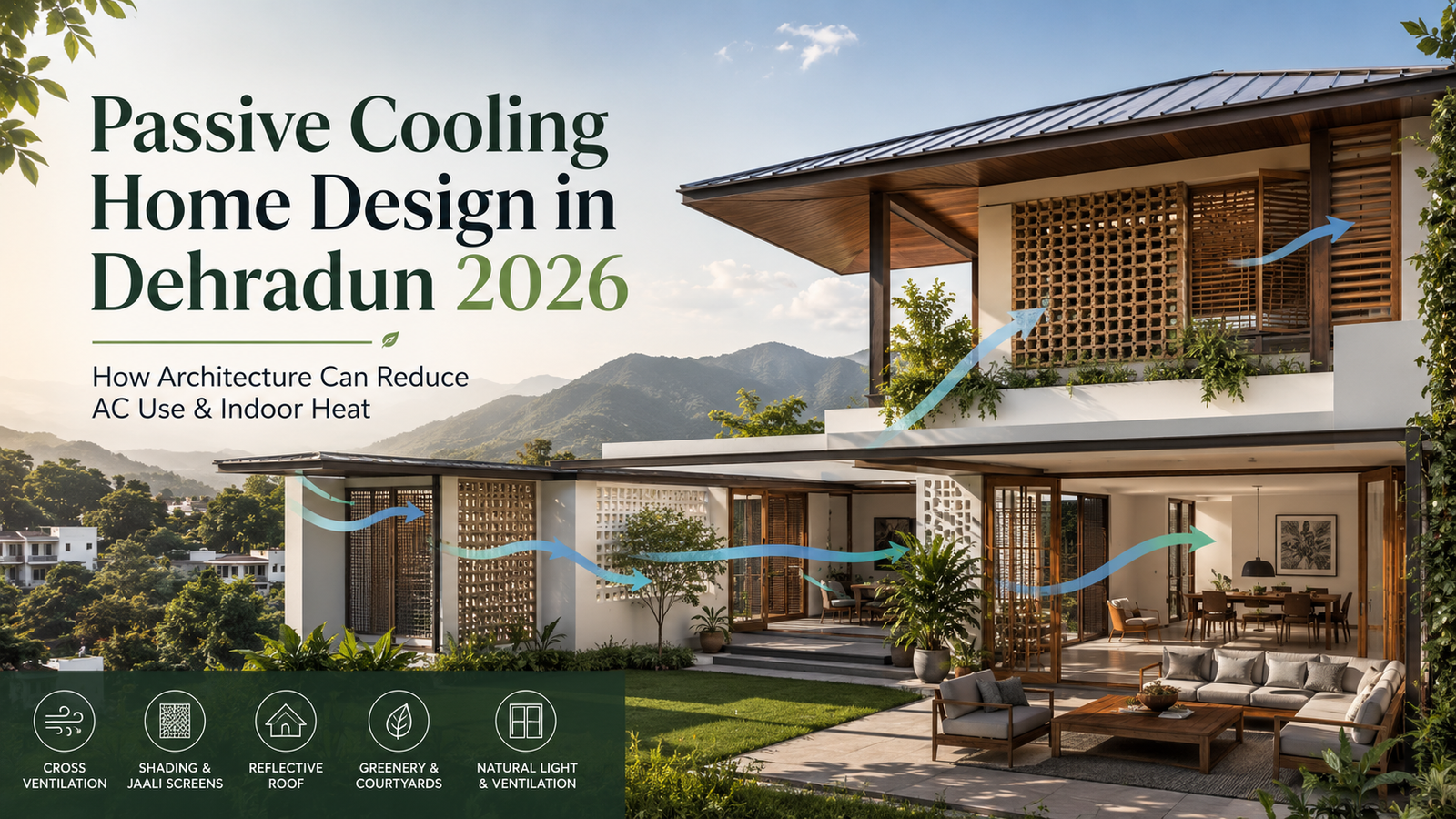
Building orientation is one of the most important passive design decisions. Architects can position living areas, openings and shaded spaces according to the movement of the sun and prevailing winds.
Cross ventilation can be created by placing suitable openings on different sides of rooms. When planned correctly, natural airflow helps remove accumulated indoor heat and improves comfort without continuously using mechanical cooling.
Use Shading to Control Direct Heat
Balconies, verandas, pergolas, chajjas and properly designed window projections can protect interiors from harsh direct sunlight.
External shading is particularly useful because it reduces solar heat before it enters the building. Trees and landscape elements can also provide natural shade around the house while improving the overall outdoor environment.
Roof Insulation and Heat-Reflective Solutions
The roof receives significant solar exposure during summer. Insulation below the roof slab, ventilated roof spaces, reflective finishes or suitable roofing systems can help reduce heat transfer into upper-floor rooms.
In a well-designed energy efficient home in Dehradun, roof planning should be considered early rather than added as an afterthought.
Choose Windows and Materials Carefully
Large glass areas may look attractive but can increase indoor heat if they are not properly positioned or shaded. Window size, orientation, glazing and ventilation should work together.
Wall materials, insulation and finishes should also be selected according to thermal performance, durability and the local climate.
Create a Cooler Home Through Better Architecture
Passive cooling does not mean eliminating air-conditioning completely. The goal is to reduce unnecessary dependence on it.
With thoughtful orientation, cross ventilation, shading, roof insulation, landscaping and climate-responsive planning, Passive Cooling Home Design in Dehradun can create homes that feel more comfortable while supporting lower energy consumption.
Heritage Architects can help homeowners plan climate-responsive, functional and energy-conscious residential spaces in Dehradun.




Leave a Reply