Landscape Architect in Dehradun: 11 Ways to Transform Outdoor Spaces
Landscape Architect in Dehradun services can transform ordinary outdoor areas into functional, attractive and high-value spaces. From residential gardens and farmhouses to resorts, commercial properties and community landscapes, professional landscape planning connects architecture, greenery, circulation, lighting, drainage and outdoor experiences into one coordinated design.
Choosing an experienced Landscape Architect in Dehradun helps property owners make better use of open land while improving aesthetics, privacy, sustainability and long-term usability. A professionally designed landscape is not limited to planting trees or creating lawns; it considers how people will actually move through, use and maintain the outdoor environment.
A skilled Landscape Architect in Dehradun begins by studying the site rather than selecting plants immediately.
Plot orientation, existing trees, ground levels, drainage, building placement, views, sunlight, access and the intended use of the property all influence landscape planning.
Heritage Architects specifically lists landscaping for farmhouses, resorts, group housing, parks, water bodies, fountains and swimming pools among its published planning services. The firm also offers site survey, project planning and 3D modelling, allowing outdoor planning to be coordinated with the larger architectural project.
The objective is to create outdoor spaces that are visually appealing but also practical, sustainable and easy to maintain.
The following eleven strategies explain how landscape architecture can turn unused or poorly planned open areas into valuable extensions of a property.
1. Begin Landscape Design With a Detailed Site Analysis
Professional landscape planning should begin with understanding the land.
A Landscape Architect in Dehradun should evaluate the property before deciding where lawns, pathways, trees, water features or outdoor seating will be placed.
Important site factors include:
- Plot dimensions
- Building position
- Existing ground levels
- Sun orientation
- Existing vegetation
- Views
- Access points
- Rainwater movement
- Parking
- Neighbouring properties
- Noise sources
- Existing utilities
- Future construction plans
The site survey establishes which areas should remain open, which need shade and where important landscape features can create the greatest impact.
Heritage Architects’ published site-survey approach includes access, orientation, measurements, surroundings and project planning before design development.
Work With the Existing Site
A good Landscape Architect in Dehradun does not automatically remove everything from the property and start again.
Existing mature trees, natural contours and attractive views can become valuable design assets.
For example, a large existing tree may become the centre of an outdoor seating court instead of being removed to create an artificial decorative feature.
Natural slopes can sometimes create interesting terraces and stepped gardens.
Analyse Opportunities and Constraints
Every property has both.
Possible opportunities include:
- Mountain views
- Mature vegetation
- Large setbacks
- Existing water features
- Natural shade
Constraints may include:
- Narrow access
- Difficult slopes
- Poor drainage
- Limited sunlight
- Adjacent buildings
- Utility lines
Create a Landscape Response
Once these conditions are understood, the design can respond intelligently rather than forcing a generic garden plan onto the property.
Core Design Principle
Good landscape architecture should emerge from the site rather than being added to it as decoration.
2. Create a Strong Entrance Landscape
The entrance is one of the most important areas of any property.
Before visitors experience the building interior, they experience the approach.
A Landscape Architect in Dehradun can use landscape design to create a memorable arrival sequence.
This may include:
- Feature trees
- Entrance planting
- Driveway edges
- Architectural lighting
- Signage
- Low walls
- Water features
- Sculptural elements
- Pedestrian pathways
The entrance should complement the architecture rather than compete with it.
Residential Entrance Landscaping
For homes, the entrance can create privacy while remaining welcoming.
A combination of planting, lighting and hardscape can clearly separate pedestrian and vehicle movement.
Trees and shrubs can soften boundary walls and provide a greener street-facing appearance.
Commercial Entrance Landscaping
Businesses, hotels and resorts may require a stronger arrival experience.
A Landscape Architect in Dehradun can coordinate the drop-off zone, signage, façade and planting so visitors understand where to enter immediately.
Avoid Overcrowding the Entrance
Adding too many decorative elements can create clutter.
The strongest entrance designs usually establish one clear visual hierarchy.
A feature tree, architectural canopy or water element can become the focal point, supported by simpler planting around it.
3. Turn Gardens Into Functional Outdoor Living Spaces
A garden should not only be viewed from inside the building.
It should be usable.
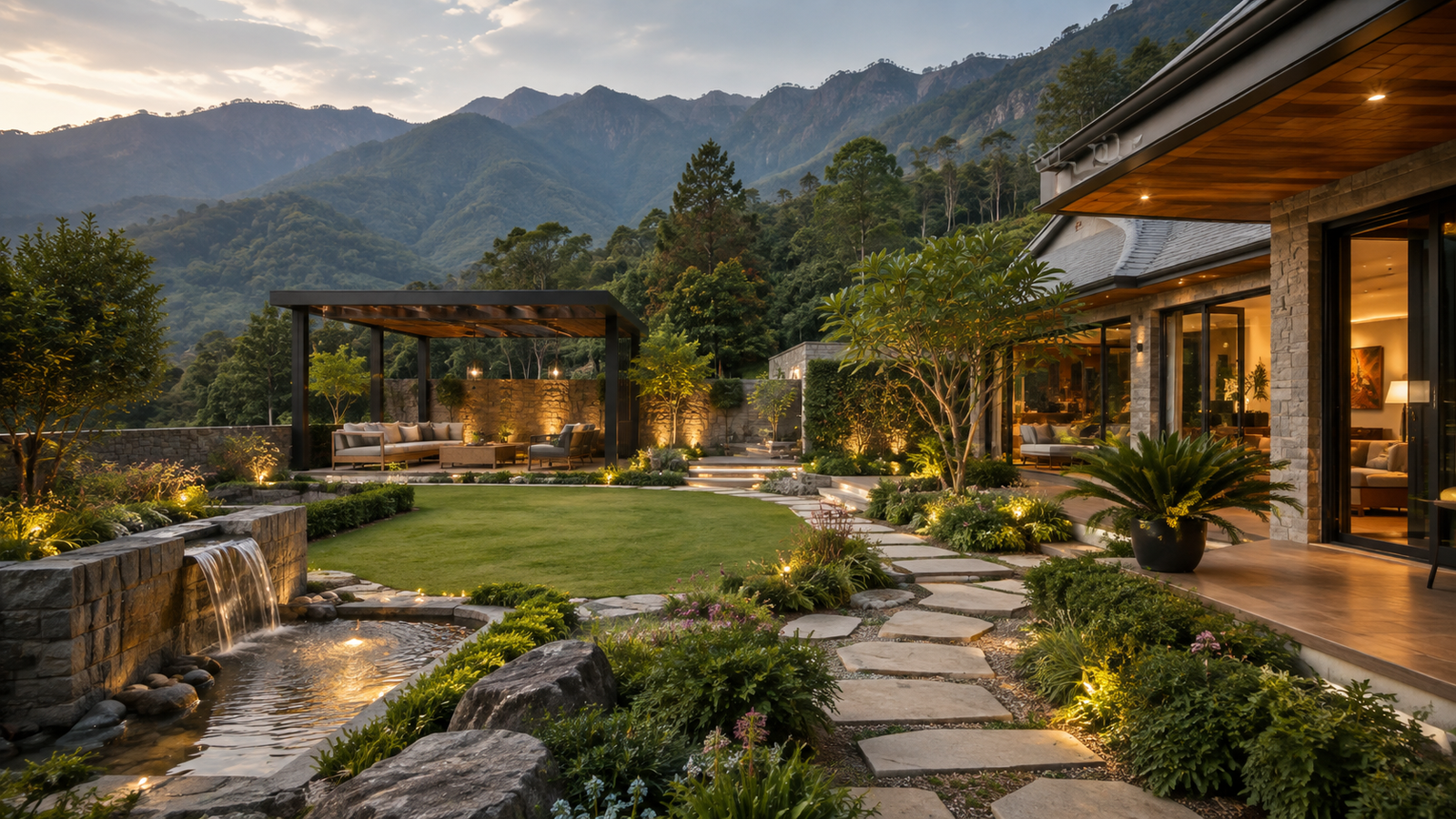
Modern Landscape Architecture in Dehradun increasingly treats gardens as extensions of indoor living areas.
Outdoor spaces can support:
- Family gatherings
- Dining
- Reading
- Yoga
- Children’s play
- Informal meetings
- Evening relaxation
- Small celebrations
A Landscape Architect in Dehradun can organise these activities into outdoor zones.
Create Outdoor Seating Areas
A seating court can be positioned near a living room, dining space or café.
It may include:
- Pergola
- Built-in benches
- Outdoor furniture
- Fire feature where appropriate
- Landscape lighting
- Planting
The location should consider shade, privacy and access.
Connect Indoor and Outdoor Spaces
Large openings, verandas and terraces can strengthen the relationship between interior and landscape.
The transition should feel natural.
Flooring materials, planting and architectural elements can visually connect the two environments.
Plan for Different Times of Day
A space that is pleasant during the morning may become uncomfortable during the afternoon.
A Landscape Architect in Dehradun studies sun exposure before positioning major outdoor activity areas.
Trees, pergolas and architectural shade can make outdoor spaces usable for longer periods.
4. Use Landscape Design to Increase Privacy
Privacy is becoming increasingly important as urban development becomes denser.
A landscape can create privacy without making a property feel enclosed.
The Landscape Architect in Dehradun can use layers of planting, architectural screens and level changes to control views.
Potential strategies include:
- Trees
- Tall shrubs
- Hedge planting
- Vertical gardens
- Pergolas
- Screen walls
- Bamboo-like planting where suitable
- Raised planters
Screen Unwanted Views
Outdoor seating should not directly face neighbouring windows or busy roads when this can be avoided.
Planting can create visual separation.
Maintain Light and Ventilation
Privacy does not require turning a garden into a dense wall of vegetation.
Overplanting can reduce daylight and airflow.
The Landscape Architect in Dehradun should balance screening with openness.
Landscape Around Boundaries
Boundary planting can soften walls and create a more natural perimeter.
Combining plants of different heights can create depth and seasonal interest.
For larger properties such as resorts and farmhouses, landscape buffers can also separate different activity zones.
5. Design Pathways That Guide Movement Naturally
Pathways determine how people experience a landscape.
Poorly planned paths can leave guests walking across lawns or creating informal shortcuts.
Professional Landscape Design in Dehradun should identify the actual movement pattern first.
Pathways may connect:
- Entrance to building
- Parking to entrance
- House to garden
- Resort rooms to amenities
- Pool to changing area
- Lawn to seating
- Garden to service spaces
A Landscape Architect in Dehradun should make primary routes clear and direct.
Choose Appropriate Path Widths
A main entrance path may require more space than a small garden trail.
The width should respond to expected use.
Select Durable Materials
Potential hardscape materials include:
- Natural stone
- Pavers
- Concrete
- Gravel
- Tiles
- Brick
Material selection should consider:
- Slip resistance
- Drainage
- Maintenance
- Weather exposure
- Visual character
Use Curves With Purpose
Curved paths can create a relaxed garden experience, but unnecessary curves increase walking distance and can appear artificial.
The route should respond to landscape features or the intended visual journey.
A Landscape Architect in Dehradun combines function and visual composition rather than using geometry randomly.
6. Use Water Features as Strategic Landscape Elements
Water can create movement, reflection and sound within outdoor spaces.
Heritage Architects specifically lists water bodies, fountains and swimming pools among its landscape-planning categories.
A Landscape Architect in Dehradun can use water features in residential, hospitality and commercial landscapes where they are appropriate to the site and maintenance plan.
Possible elements include:
- Reflecting pools
- Fountains
- Garden ponds
- Cascades
- Swimming pools
- Small courtyard water features
Position Water Features Carefully
A fountain can become an entrance focal point.
A reflecting pool may strengthen a premium hotel or residence façade.
A swimming pool can become the centre of a resort landscape.
Consider Maintenance
Water features require planning beyond appearance.
The design should consider:
- Cleaning
- Filtration
- Waterproofing
- Pump access
- Drainage
- Child safety
- Water consumption
A beautiful feature that becomes difficult to maintain can quickly lose its value.
Integrate Water With Architecture
The Landscape Architect in Dehradun should position water features according to sightlines from important spaces.
A water body visible from a lobby, living room or restaurant can provide greater visual value than one hidden in an isolated corner.
7. Make Landscape Lighting Part of the Design
A professionally designed landscape should remain attractive and usable after sunset.
Lighting should therefore be planned at the same time as pathways and planting.
A Landscape Architect in Dehradun can use lighting to improve:
- Safety
- Navigation
- Ambience
- Architectural emphasis
- Landscape drama
- Outdoor usability
Pathway Lighting
Low-level lights can identify movement routes without overwhelming the garden.
Tree Lighting
Selected trees can become evening focal points through carefully positioned uplighting.
Architectural Lighting
Landscape lights can highlight walls, textured surfaces, pergolas or entrance features.
Water-Feature Lighting
Underwater or perimeter lighting can strengthen fountains and pools after dark.
Avoid Excessive Brightness
A good outdoor environment does not need to be illuminated like a sports ground.
The Landscape Architect in Dehradun should create layers of light.
Important routes should remain visible while garden areas can use softer illumination.
This creates atmosphere and can also reduce unnecessary energy use.
8. Choose Plants According to Site Performance
Plant selection should not be based only on photographs or temporary trends.
A professional Landscape Architect in Dehradun evaluates how plants are likely to perform in the specific location.
Important considerations include:
- Sun exposure
- Shade
- Soil
- Water requirements
- Mature size
- Maintenance
- Seasonal behaviour
- Root growth
- Function
Plants may be selected for different purposes.
Shade Trees
Larger trees can shade seating, parking and pathways.
Screening Plants
Dense planting may provide privacy.
Feature Plants
Selected trees or flowering plants can create focal points.
Ground Covers
Ground covers can reduce exposed soil and visually connect planting areas.
Lawn
Lawns provide flexible recreation areas but require maintenance.
The Landscape Architect in Dehradun should therefore determine where lawn is genuinely useful rather than covering every available open area with grass.
Use a Balanced Planting Palette
Too many unrelated species can make landscapes visually chaotic.
Repeating selected plant families creates greater design unity.
Heritage Architects’ sustainability-focused content also emphasises environmentally responsive design within Dehradun’s landscape and climatic context.
9. Integrate Drainage and Rainwater Management
One of the most important functional aspects of landscape design is water movement.
Outdoor spaces should not become waterlogged after rainfall.
A Landscape Architect in Dehradun should coordinate landscape levels with drainage.
Potential strategies include:
- Proper surface slopes
- Drain channels
- Permeable surfaces
- Recharge areas
- Rain gardens
- Controlled roof-water discharge
- Landscape swales
Avoid Water Collecting Near Buildings
Landscape levels should generally move unwanted surface water away from vulnerable building edges.
Planters and lawns should not create conditions where water remains trapped against walls.
Use Permeable Hardscape Where Appropriate
Not every outdoor surface needs to be impermeable concrete.
Selected permeable paving systems can allow infiltration while still supporting movement.
Coordinate Landscape With Roof Drainage
Roof runoff should have a planned destination.
It should not simply discharge onto paths or entrance areas.
Recent Heritage Architects content on monsoon-ready design also stresses the importance of site drainage, controlled runoff and rainwater planning in Dehradun projects.
The Landscape Architect in Dehradun should therefore treat drainage as part of design quality rather than a hidden technical issue.
10. Build Landscape Zones for Resorts and Hospitality Projects
For resorts, farm stays and hospitality properties, landscape architecture can directly influence guest experience.
A Landscape Architect in Dehradun can create multiple outdoor experiences across the same property.
Heritage Architects lists both farmhouses and resorts among its landscape categories.
Potential hospitality landscape zones include:
- Arrival court
- Main lawn
- Pool deck
- Outdoor restaurant
- Wedding lawn
- Bonfire area
- Meditation garden
- Children’s play area
- Scenic viewpoint
- Walking trail
- Private villa garden
Create Different Experiences
Not every landscape area should look identical.
An active pool zone can feel energetic, while a meditation garden can feel quieter and more private.
Use Landscape for Guest Privacy
Resort rooms and villas often require separation.
Trees, hedges and planted buffers can provide privacy without excessive walls.
Design Photogenic Spaces
Outdoor hospitality spaces increasingly contribute to marketing.
A Landscape Architect in Dehradun can create memorable visual moments through:
- Feature planting
- Landscape frames
- Water
- Lighting
- Viewpoints
- Sculptural seating
The design should remain functional rather than becoming a collection of decorative photo backgrounds.
11. Plan for Long-Term Property Value and Maintenance
Landscape architecture should perform well beyond the opening day.
A garden that requires unrealistic levels of maintenance may become expensive and neglected.
The Landscape Architect in Dehradun should therefore discuss maintenance from the design stage.
Important considerations include:
- Irrigation
- Pruning
- Lawn care
- Plant replacement
- Lighting access
- Drain cleaning
- Water-feature maintenance
- Hardscape repairs
Choose Durable Landscape Materials
Outdoor materials face sunlight, rainfall, dust and intensive use.
Material selection should consider long-term exposure.
Natural stone, pavers, external-grade finishes and suitable outdoor furniture should be selected according to location.
Design Accessible Maintenance Routes
Garden equipment, service teams and replacement materials need access.
Maintenance should not require workers to repeatedly move through premium guest areas.
Reduce Unnecessary Complexity
A sophisticated landscape does not need dozens of difficult-to-maintain features.
The most valuable design may use a limited material and planting palette with strong spatial planning.
The Landscape Architect in Dehradun should focus on lasting quality rather than temporary visual complexity.
Landscape Architecture for Residential Homes
Residential landscapes should respond to the family’s lifestyle.
A homeowner may require:
- Front garden
- Kitchen garden
- Children’s play area
- Outdoor dining
- Lawn
- Parking
- Terrace garden
- Privacy planting
The Landscape Architect in Dehradun can allocate these functions according to site conditions.
For example, the most private part of the garden can become the family seating zone, while entrance landscaping can focus on visual identity.
Front Landscape
The front landscape contributes to curb appeal.
It should balance:
- Vehicle access
- Pedestrian entry
- Greenery
- Lighting
- Privacy
Backyard Landscape
Rear gardens can support more informal family activities.
Terrace Landscaping
Properties with limited ground-level open space can use terraces.
A terrace garden may include planters, seating and shading, subject to appropriate structural and waterproofing coordination.
Landscape Architecture for Farmhouses
Farmhouse properties usually provide more land, but larger sites require stronger planning rather than simply more planting.
Heritage Architects’ services specifically include farmhouse landscaping, and its farmhouse-focused content also emphasises nature-oriented and sustainable design approaches.
A Landscape Architect in Dehradun may organise farmhouse land into:
- Arrival zone
- Residence garden
- Orchard
- Lawn
- Pool
- Outdoor dining
- Walking paths
- Utility areas
- Kitchen garden
- Natural landscape
The objective is to prevent the property from feeling like one large undefined lawn.
Different landscape zones create more usable experiences.
Landscape Architecture for Group Housing
Shared residential developments require outdoor areas that serve many age groups.
A Landscape Architect in Dehradun may plan:
- Central green
- Children’s play area
- Senior-citizen seating
- Walking tracks
- Community spaces
- Sports areas
- Entrance landscape
Heritage Architects explicitly includes group housing among its landscaping categories.
Landscape in these developments should balance active and quiet zones.
A playground should not necessarily be positioned immediately beside senior seating.
Clear zoning can improve usability for everyone.
Parks and Community Landscape Design
Public and semi-public parks require different planning from private gardens.
A Landscape Architect in Dehradun should consider:
- Multiple entry points
- Path hierarchy
- Seating
- Shade
- Children
- Elderly visitors
- Lighting
- Maintenance
- Open lawns
- Gathering spaces
Heritage Architects includes parks in its landscape-planning service categories.
Paths should create clear movement loops rather than disconnected routes.
Trees can provide shade to seating and walking tracks.
Open lawns can support informal recreation and community gatherings.
Sustainable Landscape Architecture in Dehradun
Sustainability should be integrated into landscape design rather than added as a marketing label.
A Landscape Architect in Dehradun can reduce unnecessary resource demand through intelligent planning.
Potential strategies include:
- Climate-responsive plant selection
- Controlled irrigation
- Rainwater management
- Permeable paving
- Existing-tree retention
- Durable local materials
- Reduced unnecessary lawn
- Energy-efficient landscape lighting
Heritage Architects’ own sustainable-architecture content discusses environmentally responsive planning and the suitability of Dehradun’s landscape and climate for more sustainable design approaches.
Preserve Existing Natural Assets
Mature trees take years to develop.
Where appropriate, retaining healthy existing vegetation can provide immediate shade and landscape character.
Reduce High-Maintenance Areas
Large decorative lawns may consume more maintenance than mixed planting.
Landscape planning should allocate lawn where it adds functional value.
Think Long Term
Sustainability includes durability.
A material that needs frequent replacement may be less responsible than one that lasts longer.
Hardscape Design: The Framework of the Landscape
Hardscape includes non-plant landscape elements such as:
- Pathways
- Walls
- Steps
- Decks
- Pergolas
- Seating
- Paving
- Planters
A Landscape Architect in Dehradun coordinates hardscape with planting so the landscape feels integrated.
Material Consistency
The landscape should relate to the architecture.
If the building uses natural stone, selected stone elements may continue into the outdoor space.
Control Material Variety
Using too many different surfaces can make the property look fragmented.
A limited palette often creates a more premium result.
Landscape Design Around Swimming Pools
Swimming pools can become major outdoor focal points for homes, resorts and farmhouses.
Heritage Architects lists swimming pools among its landscape service categories.
A Landscape Architect in Dehradun should plan not only the pool itself but also the surrounding environment.
This can include:
- Pool deck
- Lounge seating
- Shade
- Changing access
- Landscape screening
- Outdoor shower
- Lighting
- Service access
Poolside materials require particular attention to slip resistance and outdoor exposure.
Privacy planting can make residential or resort pool areas feel more comfortable.
Landscape Architecture for Commercial Properties
Commercial landscape architecture supports more than beauty.
It can help define:
- Entry
- Drop-off
- Customer movement
- Outdoor seating
- Signage
- Building identity
The Landscape Architect in Dehradun can coordinate outdoor planning with offices, retail properties, restaurants and institutional buildings.
Landscape can soften large paved areas and visually connect the property with its surroundings.
It can also create shaded waiting and gathering areas.
Commercial planting should generally be selected with maintenance and visibility in mind.
3D Landscape Visualisation Before Execution
Landscape plans can be difficult for clients to understand from two-dimensional drawings.
3D modelling can help communicate:
- Planting character
- Pathways
- Outdoor seating
- Fountains
- Swimming pools
- Lighting
- Landscape levels
Heritage Architects includes 3D modelling and walkthroughs within its site-survey and planning services.
A Landscape Architect in Dehradun can use visualisation to help property owners make decisions before expensive execution begins.
However, renderings should be supported by technical landscape drawings.
Contractors still need dimensions, levels, material specifications and planting details.
Landscape Construction and Site Supervision
A strong landscape concept can fail through poor site execution.
The Landscape Architect in Dehradun should coordinate important design details during construction according to the agreed project scope.
Areas requiring attention may include:
- Ground levels
- Drainage
- Path alignment
- Planter dimensions
- Lighting points
- Irrigation
- Plant placement
- Hardscape finishes
Landscape levels are particularly important.
Incorrect levels can create waterlogging and conflicts with building entrances.
Site review can identify these issues before all finishing work is complete.
Common Landscape Design Mistakes to Avoid
Using Plants Without Understanding Mature Size
Small nursery plants can become very large.
Plant spacing should consider future growth.
Creating Lawn Everywhere
Not every part of the property needs grass.
Use lawn where people will actually use it.
Ignoring Drainage
Waterlogging can damage both plants and outdoor surfaces.
Planting Too Close to Buildings
Trees and large shrubs require sufficient space.
Forgetting Maintenance Access
Fountains, lighting, irrigation and planting all require future service.
Overusing Decorative Materials
Too many materials can reduce visual consistency.
No Shade Around Seating
Outdoor areas can remain unused if they become uncomfortable during sunny periods.
Poor Lighting
Dark pathways reduce usability, while excessive lighting damages ambience.
Ignoring Existing Trees
Mature vegetation can be among the most valuable features of a site.
Designing Landscape After Construction
A Landscape Architect in Dehradun should ideally be involved early enough for landscape levels, drainage, architecture and services to be coordinated.
How Landscape Architecture Creates Higher Property Value
Landscape quality can significantly influence how a property is perceived.
A thoughtfully designed entrance can create a stronger first impression.
Usable gardens add lifestyle value to homes.
For hospitality properties, outdoor experiences can create additional guest activities and event spaces.
A Landscape Architect in Dehradun therefore considers open land as an asset rather than leftover property.
Landscape can provide value through:
- Better usability
- Improved aesthetics
- Outdoor amenities
- Privacy
- Shade
- Stronger property identity
- Improved guest experience
- Flexible recreational areas
The objective should be to make the landscape contribute to the property’s overall purpose.
Why Choose a Landscape Architect Instead of Only a Gardener?
Garden maintenance and landscape architecture are different professional functions.
A gardener may handle planting and regular maintenance.
A Landscape Architect in Dehradun works at a broader planning level, coordinating outdoor spaces with:
- Architecture
- Site levels
- Circulation
- Hardscape
- Drainage
- Lighting
- Water features
- Outdoor functions
A strong landscape project may still require gardeners, horticulture professionals, engineers and specialised contractors during execution and maintenance.
The architect’s role is to create the overall design framework.
Why Consider Heritage Architects for Landscape Planning in Dehradun?
Heritage Architects’ published services specifically include landscaping for:
- Farmhouses
- Resorts
- Group housing
- Parks
- Water bodies
- Fountains
- Swimming pools
The same service offering includes site survey, project planning and 3D modelling.
This makes landscape planning relevant to the firm’s wider architectural approach because buildings and outdoor spaces can be developed as one coordinated property rather than separate design exercises.
A property owner seeking a Landscape Architect in Dehradun can therefore discuss the complete relationship between building placement, open spaces, pathways, landscape features and future property use.
Frequently Asked Questions
What does a Landscape Architect in Dehradun do?
A Landscape Architect in Dehradun plans outdoor spaces by coordinating planting, pathways, seating, hardscape, lighting, water features, levels, drainage and their relationship with buildings.
Is landscape architecture only for large properties?
No. Small residential plots, terraces and compact commercial properties can also benefit from professional landscape planning.
What is the difference between landscaping and landscape architecture?
Landscaping may refer broadly to planting and improving outdoor spaces, while landscape architecture involves structured site planning, circulation, hardscape, levels, outdoor functions and other technical design considerations.
Can a Landscape Architect in Dehradun design farmhouse landscapes?
Yes. Farmhouses can benefit from zoning for lawns, orchards, pools, outdoor dining, gardens and utility areas. Heritage Architects specifically lists farmhouse landscaping in its services.
Can landscape design include swimming pools?
Yes. Swimming pools may form part of larger outdoor planning when appropriate to the project. Heritage Architects lists swimming pools among its landscape categories.
Why is drainage important in landscaping?
Incorrect drainage can create waterlogging, damage plants and affect outdoor surfaces or building edges. Levels and runoff should therefore be considered during landscape planning.
How can landscape design improve privacy?
Trees, hedges, layered planting, pergolas and landscape screens can limit unwanted views without completely enclosing a property.
Is landscape lighting important?
Yes. Landscape lighting can improve evening usability, navigation, safety and visual atmosphere.
Should existing trees be retained?
Healthy existing trees can provide shade and character, but their condition and relationship with the proposed development should be evaluated before decisions are made.
Is 3D visualisation useful for landscape architecture?
Yes. 3D views can help clients understand outdoor spaces, planting character, pools, pathways and lighting before execution. Heritage Architects offers 3D modelling within its project-planning services.
How do I choose a Landscape Architect in Dehradun?
Review the architect’s understanding of site planning, landscape zoning, drainage, materials, planting, outdoor usability, visualisation and construction coordination. The professional scope should be clearly defined before work begins.
Conclusion
Landscape architecture can transform open land from an unused portion of a property into one of its most valuable assets.
A professional Landscape Architect in Dehradun begins by understanding the site, architecture, users and long-term objectives of the property.
Strong landscape design creates clear entrances, comfortable outdoor living spaces, natural privacy, functional pathways and meaningful connections between buildings and gardens.
It can also integrate water bodies, fountains, swimming pools, lighting, recreational areas and sustainable rainwater strategies.
For homes, landscape architecture can improve everyday lifestyle and privacy.
For farmhouses and resorts, it can create multiple outdoor experiences and strengthen the identity of the property.
For group housing and parks, it can provide more useful shared spaces for different user groups.
The most successful Landscape Architecture in Dehradun does not rely on excessive decoration. It uses intelligent zoning, appropriate plants, durable hardscape, well-planned drainage and manageable maintenance requirements.
Heritage Architects’ published landscape services cover farmhouses, resorts, group housing, parks, water bodies, fountains and swimming pools, alongside site survey and 3D planning.
For property owners planning a new landscape or upgrading an existing outdoor environment, working with an experienced Landscape Architect in Dehradun can help create spaces that are more usable, visually distinctive, environmentally responsive and valuable over the long term.



Leave a Reply