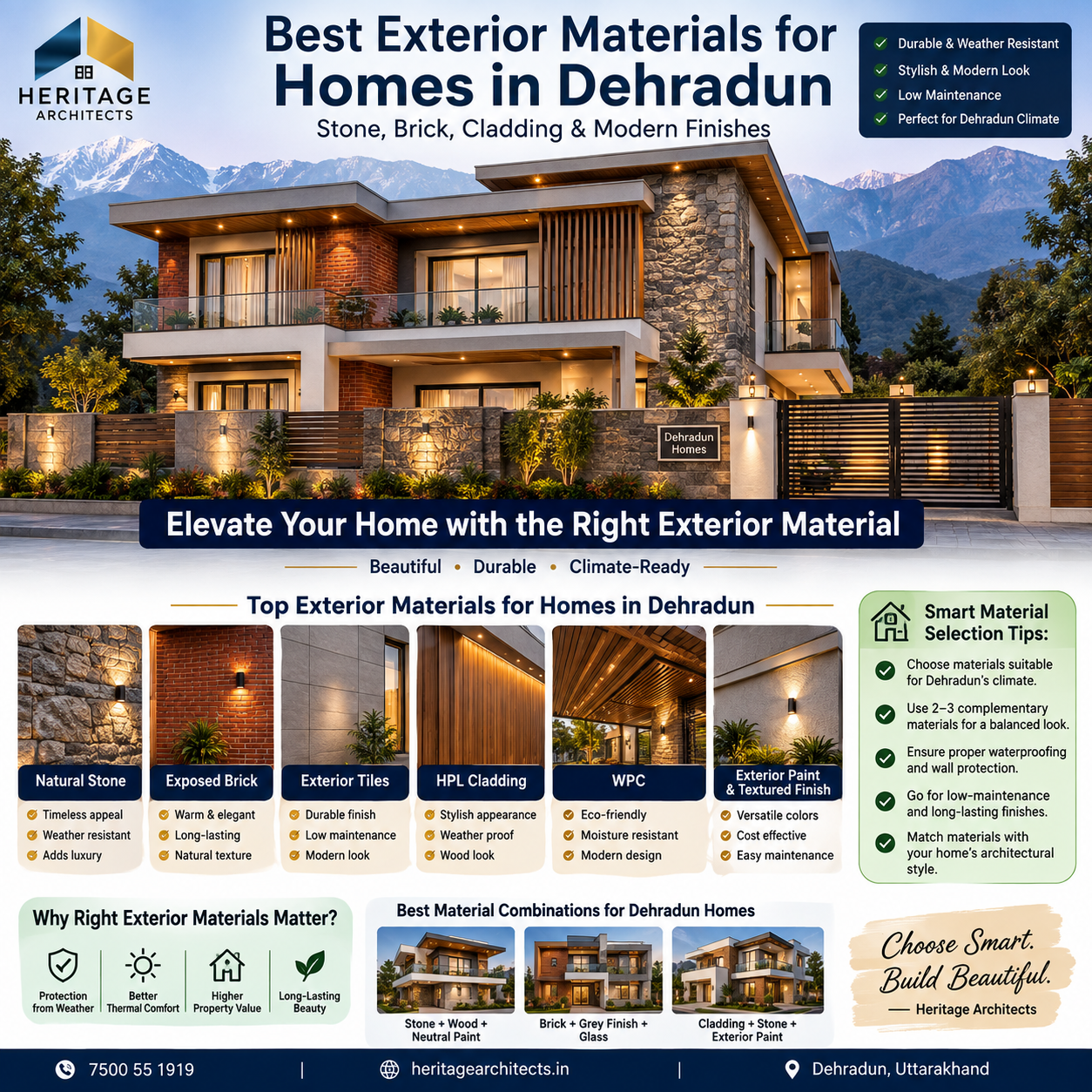
Best Exterior Materials for Homes in Dehradun: Stone, Brick, Cladding & Modern Finishes
A home’s exterior does much more than create its first impression. It protects the building from sunlight, rainfall, moisture, temperature variation and everyday environmental exposure. Choosing the best exterior materials for homes in Dehradun is therefore both an architectural and a practical decision.
Dehradun’s residential architecture ranges from contemporary villas and compact urban houses to traditional homes, farmhouses and hillside properties. Each project requires materials that suit the architectural concept, location, maintenance expectations and budget.
Natural stone may provide timeless character, exposed brick can create warmth, while modern cladding systems can produce clean contemporary elevations. However, selecting materials only because they look attractive in photographs can lead to maintenance problems later.
The best exterior materials for homes in Dehradun should provide the right combination of durability, weather suitability, aesthetics, installation quality and long-term maintenance.
This guide explains the most useful options and how homeowners can combine them to create attractive, functional and enduring residential facades.
Why Exterior Material Selection Matters in Dehradun
Exterior surfaces remain continuously exposed to changing environmental conditions. They must manage sunlight, rainfall, dust, moisture and seasonal changes while retaining their appearance.
For this reason, house elevation planning should not begin with colour selection alone.
Professional architects evaluate the complete exterior envelope before recommending the best exterior materials for homes in Dehradun.
Important factors include:
- Site orientation.
- Building height.
- Rain exposure.
- Available shading.
- Surrounding vegetation.
- Architectural style.
- Maintenance accessibility.
- Budget.
- Expected lifespan.
- Installation method.
A material that performs well under a protected porch may not perform equally well on an exposed upper-floor wall.
Architecture Should Determine Material Placement
Good exterior design does not require covering every wall with expensive finishes.
Instead, materials should be positioned according to architectural composition.
A modern house exterior design in Dehradun might use natural stone around the entrance, a neutral exterior coating on larger wall areas and wood-finish cladding on balconies or soffits.
This approach creates visual richness without making the building excessively complicated.
1. Natural Stone – Timeless and Appropriate for Dehradun Homes
Natural stone remains one of the best exterior materials for homes in Dehradun because of its durability, visual depth and connection with the region’s natural landscape.
Stone works particularly well for:
- Entrance walls.
- Boundary walls.
- Feature columns.
- Ground-floor facades.
- Landscape walls.
- Porch areas.
- Selected elevation panels.
Why Natural Stone Works Well
Stone provides texture that painted walls cannot easily reproduce.
Depending on the architectural style, stone can make a home feel contemporary, rustic, luxurious or regionally inspired.
Common visual approaches include grey stone, earthy sandstone tones, irregular natural finishes and precision-cut modern stone panels.
Avoid Covering the Entire Building
Excessive stone can make a facade feel visually heavy.
Architects usually achieve better results by using stone as a feature material rather than covering every elevation.
Combine Stone With Neutral Surfaces
Stone pairs effectively with:
- White plaster.
- Warm beige walls.
- Charcoal finishes.
- Glass.
- Metal.
- Wood textures.
Pay Attention to Joint Detailing
The quality of installation is as important as the stone itself.
Poor joints, incorrect adhesives or inadequate waterproofing may reduce long-term performance.
Use Stone Where It Has Architectural Purpose
A successful elevation uses stone to emphasize entrances, vertical elements, balconies or structural forms rather than simply adding decorative texture.
This principle makes natural stone one of the best exterior materials for homes in Dehradun when used strategically.
2. Exposed Brick for Warm, Character-Rich Facades
Exposed brick has returned strongly in contemporary residential architecture.
It provides texture, warmth and a timeless visual identity.
Brick can work particularly well in houses that combine modern forms with natural materials.
For homeowners looking for the best exterior materials for homes in Dehradun, brick is worth considering for selected walls and architectural features.
Benefits of Exposed Brick
Brick offers:
- Natural texture.
- Visual warmth.
- Strong architectural character.
- Compatibility with landscape.
- Good combination possibilities.
Exposed brick looks particularly effective alongside concrete, black metal frames and greenery.
Full Brick vs Brick Cladding
A facade does not necessarily require traditional full-depth exposed masonry.
Depending on the construction system, brick slips or facade tiles can create a similar visual effect with different installation requirements.
The architect should determine the suitable system based on structural and wall conditions.
3. Exterior-Grade Tiles
Exterior tiles can provide a controlled and relatively consistent finish.
Modern exterior-grade collections are available in stone, concrete, marble and wood-inspired appearances.
They can be useful for homeowners seeking modern exterior materials in Dehradun without relying exclusively on natural materials.
Suitable Applications
Exterior tiles may work well on:
- Entrance walls.
- Balcony walls.
- Columns.
- Boundary walls.
- Selected facade panels.
Choose Products Designed for Exterior Use
Interior tiles should not automatically be used outdoors.
Exterior surfaces require appropriate material specifications, installation systems and adhesives.
Water exposure, heat and expansion must be considered before selecting the product.
The best exterior materials for homes in Dehradun are not defined by appearance alone; technical suitability is equally important.
4. HPL Cladding for Contemporary Elevations
High Pressure Laminate, commonly referred to as HPL, is frequently used to introduce wood tones or contemporary panelled finishes to building exteriors.
It is popular in modern home elevation design in Dehradun because it can create clean lines without using natural timber on highly exposed surfaces.
Where HPL Can Be Used
HPL can be incorporated into:
- Balcony ceilings.
- Entrance panels.
- Facade accents.
- Vertical features.
- Soffits.
- Architectural fins.
Wood Appearance Without a Traditional Timber Facade
Wood-look panels can soften modern concrete and glass architecture.
However, homeowners should compare specifications carefully because exterior cladding products differ in quality and performance.
Installation detailing, supporting framework and weather protection should always be professionally planned.
5. WPC and Wood-Look Exterior Elements
Wood Plastic Composite products are another option for selected external architectural applications.
They are often used when designers want the warmth of timber-inspired finishes with a more controlled manufactured material.
When choosing the best exterior materials for homes in Dehradun, WPC can be useful for architectural accents rather than large uninterrupted facade areas.
Common Uses
- Exterior fins.
- Pergolas.
- Screens.
- Balcony elements.
- Decorative wall sections.
- Ceiling features.
WPC can work particularly well in contemporary villas where natural-looking textures are required alongside stone and neutral walls.
6. Exterior Paint and Textured Coatings
Paint remains one of the most practical and flexible exterior finishes.
Even premium architectural homes generally depend on painted or coated wall surfaces across a significant percentage of the facade.
Exterior paint can therefore be considered one of the most important exterior wall materials from both aesthetic and maintenance perspectives.
Why Paint Remains Essential
Exterior coatings offer:
- Large colour selection.
- Easy visual updates.
- Comparatively simple maintenance.
- Compatibility with multiple architectural styles.
- Cost-effective coverage of large wall areas.
Use a Controlled Colour Palette
Modern houses generally look more sophisticated with two or three coordinated colours rather than many competing shades.
Popular combinations include:
- Off-white + charcoal + wood.
- Beige + stone + black.
- White + grey + natural stone.
- Cream + brown + textured accents.
A restrained palette allows the form of the architecture to remain visually dominant.
7. Textured Plaster and Decorative Exterior Finishes
Textured coatings can create subtle variation without introducing another physical cladding material.
They are especially useful when designers want larger wall planes to appear more refined.
For a modern house exterior design in Dehradun, textures can be applied to feature walls while smoother finishes remain dominant elsewhere.
Keep Texture Subtle
Very aggressive patterns can make a facade appear dated over time.
Fine, natural-looking textures generally integrate better with contemporary architecture.
When combined with stone, wood-look cladding and architectural lighting, subtle texture can significantly improve visual depth.
8. Exposed Concrete and Concrete-Look Finishes
Concrete-inspired facades have become popular in minimalist contemporary architecture.
Actual exposed concrete requires precise execution, while concrete-look coatings or tiles can provide an alternative aesthetic.
Among the best exterior materials for homes in Dehradun, concrete finishes work particularly well for homeowners seeking an understated, modern appearance.
Pair Concrete With Warmer Materials
Concrete alone can sometimes appear visually cold.
Architects often combine it with:
- Natural wood tones.
- Stone.
- Warm lighting.
- Landscaping.
- Black metal.
This contrast produces a balanced contemporary elevation.
9. Metal Screens and Architectural Fins
Metal is not only a structural material. It can also become an important visual element in a residential facade.
Screens and fins are particularly useful because they can provide design and functional benefits simultaneously.
They can help:
- Create privacy.
- Shade windows.
- Conceal utility areas.
- Add vertical emphasis.
- Protect balconies.
- Introduce facade rhythm.
Metal Screens for Privacy
Homes located close to roads or neighbouring buildings can benefit from perforated screens or vertical fins.
These elements allow architects to maintain openness while controlling direct visibility.
Metal elements therefore complement many of the best exterior materials for homes in Dehradun.
10. Glass for Modern Residential Facades
Glass can make homes appear lighter, more open and contemporary.
It is commonly used for:
- Balcony railings.
- Large windows.
- Staircase glazing.
- Double-height spaces.
- Entrance areas.
However, glass must be used carefully.
More Glass Does Not Automatically Mean Better Architecture
Large glazed areas need to consider:
- Orientation.
- Privacy.
- Heat gain.
- Shading.
- Safety.
- Cleaning access.
A successful modern facade balances glass with solid walls and shading elements.
For this reason, the best exterior materials for homes in Dehradun should always be selected as part of one integrated elevation strategy.
How to Combine Exterior Materials Professionally
Material combination is where many residential elevations either succeed or fail.
Using stone, brick, wood, glass and textured finishes together does not automatically create a premium house.
Too many materials may produce visual clutter.
Follow the Primary-Secondary-Accent Approach
A practical strategy is to organize materials into three categories.
Primary finish:
The dominant material covering most wall surfaces, usually paint or plaster.
Secondary material:
A stronger architectural finish such as stone or brick.
Accent material:
Wood-look panels, metal, glass or another smaller detail.
This creates hierarchy.
For example:
Primary: warm off-white exterior coating
Secondary: grey natural stone
Accent: wood-look HPL + black metal
This combination can create a sophisticated modern house elevation design in Dehradun.
Exterior Materials for Different Architectural Styles
Different homes require different material palettes.
Contemporary Modern Homes
Suitable materials include:
- Neutral exterior coatings.
- Large glass panels.
- Wood-look cladding.
- Grey stone.
- Metal fins.
Luxury Villas
Luxury residences may combine:
- Premium natural stone.
- Large-format facade tiles.
- Glass.
- Metal accents.
- Warm architectural lighting.
Farmhouses
Farmhouse architecture often benefits from:
- Natural stone.
- Brick.
- Timber-inspired materials.
- Earth-toned exterior finishes.
- Landscape integration.
Compact Urban Houses
Compact properties should generally avoid excessive material transitions.
A controlled palette of paint, one cladding material and limited accents usually creates stronger results.
Choosing the best exterior materials for homes in Dehradun therefore depends heavily on architectural style.
Consider Maintenance Before Selecting Exterior Materials
A facade is exposed continuously and therefore requires maintenance over time.
Before finalizing a material, homeowners should consider how easily it can be cleaned, repaired or replaced.
Questions to Ask
- Will the material fade?
- Can damaged panels be replaced?
- Does the surface retain dust?
- Will joints require maintenance?
- How will upper floors be accessed?
- Does the product require periodic coating?
- Is skilled installation available?
A material with a slightly higher initial investment may sometimes offer better long-term value if maintenance is manageable.
Importance of Waterproofing Behind Exterior Finishes
A beautiful cladding system cannot compensate for poor waterproofing.
Water penetration can affect both appearance and building performance.
Areas requiring careful detailing include:
- Balcony junctions.
- Parapets.
- Window openings.
- Cladding joints.
- Roof edges.
- Projection junctions.
- External service penetrations.
When planning the best exterior materials for homes in Dehradun, architects must consider not only visible surfaces but also the construction layers behind them.
Architectural Lighting Can Transform Exterior Materials
Materials look different during the day and at night.
Architectural lighting can highlight stone textures, vertical fins, entrance features and landscape elements.
However, lighting should reinforce architecture rather than overwhelm it.
Useful Lighting Strategies
Consider:
- Warm wall washers.
- Step lights.
- Concealed balcony lighting.
- Entrance lighting.
- Landscape uplights.
- Subtle facade illumination.
Stone and textured surfaces become particularly effective when lighting emphasizes their depth.
Common Exterior Material Mistakes to Avoid
Homeowners frequently make material decisions after seeing isolated photographs online.
This can produce inconsistent elevations.
Using Too Many Materials
Combining five or six finishes on a relatively small facade can make it appear fragmented.
Selecting Material Without Studying Orientation
A finish suitable for a shaded wall may not perform equally well on a highly exposed surface.
Ignoring Installation Quality
Even premium materials can fail when improperly installed.
Copying Another House Exactly
Architecture should respond to plot size, proportions and building form.
A material composition designed for a large villa may not suit a narrow urban facade.
Ignoring Long-Term Maintenance
The best exterior materials for homes in Dehradun should remain practical after several years, not simply look attractive immediately after construction.
How an Architect Helps With Exterior Material Selection
A residential architect evaluates exterior materials as part of a complete design rather than as independent decorative products.
Professional planning considers:
- Facade proportions.
- Material transitions.
- Colour combinations.
- Window positioning.
- Weather exposure.
- Shading.
- Landscape.
- Exterior lighting.
- Installation detailing.
This process helps achieve an exterior that appears intentional and balanced.
A professional residential architect in Dehradun can also coordinate material selection with the floor plan so that windows, balconies and facade projections have practical purposes.
Why Choose Heritage Architects for House Exterior Design in Dehradun?
Heritage Architects approaches residential architecture with a focus on functionality, aesthetics and long-term usability.
Material selection is integrated into the overall architectural concept rather than treated as a final decorative layer.
For homeowners searching for the best exterior materials for homes in Dehradun, the objective should be to create a facade that complements the house, its surroundings and the client’s lifestyle.
A customized exterior design can coordinate:
- Stone.
- Brick.
- Exterior coatings.
- Modern cladding.
- Glass.
- Metal.
- Landscape.
- Lighting.
The result is a cohesive elevation rather than a collection of unrelated finishes.
Final Thoughts
The exterior of a home represents both its architectural personality and its first layer of environmental protection.
There is no single material that is ideal for every property.
The best exterior materials for homes in Dehradun are those selected according to building design, exposure, maintenance expectations, architectural style and budget.
Natural stone provides timeless character. Brick adds warmth. HPL and WPC can introduce contemporary wood-inspired accents. Exterior coatings remain practical for large surfaces, while metal, glass and concrete-inspired finishes can add modern architectural detail.
The strongest elevations generally use fewer materials more intelligently.
Instead of covering every surface with a different finish, architects create hierarchy through proportion, texture and carefully controlled transitions.
If you are planning a new house or upgrading an existing elevation, professional material planning can help ensure your exterior looks refined today and continues to perform effectively in the years ahead.
Plan Your Home Exterior With Heritage Architects
Looking for professional guidance on the best exterior materials for homes in Dehradun?
Heritage Architects can help create a customized residential elevation with carefully selected materials, balanced colours, functional shading, architectural lighting and contemporary facade detailing.
Website: heritagearchitects.in
Location: Dehradun, Uttarakhand
CTA: Enquire Now for Residential Architecture, Exterior Design & Elevation Planning
SEO FAQs
What are the best exterior materials for homes in Dehradun?
Natural stone, exterior-grade coatings, brick, facade tiles, HPL, WPC, metal and glass can all be suitable depending on architectural design and site conditions. The best exterior materials for homes in Dehradun should be selected according to exposure, maintenance and overall facade composition.
Is natural stone good for house exteriors?
Yes. Natural stone offers durability, texture and timeless visual appeal. It is particularly effective for entrances, feature walls, boundary walls and selected facade elements.
Which exterior material gives a modern look?
Concrete-inspired finishes, HPL, glass, metal fins, large-format exterior tiles and neutral exterior coatings can create contemporary residential elevations.
Is brick suitable for modern house elevations?
Yes. Exposed brick can work extremely well in contemporary architecture when paired with materials such as concrete, glass, metal and natural landscaping.
How many exterior materials should be used on one house?
There is no fixed number, but a restrained palette generally looks more sophisticated. A primary finish, secondary material and limited accent material often provide enough visual variety.
Which exterior materials require less maintenance?
Maintenance depends on product quality, exposure and installation. Exterior-grade coatings, properly installed stone, selected facade tiles and quality cladding systems can all provide practical long-term performance when correctly specified.
Should exterior materials be selected before construction starts?
Ideally, yes. Major material choices should be coordinated during architectural planning because cladding thickness, supporting structures, waterproofing, window details and facade projections may affect construction.
How can I make my home exterior look premium?
Focus on proportion, a controlled colour palette, two or three coordinated materials, landscape design and subtle architectural lighting rather than excessive decoration. Professional planning usually delivers a more timeless result.


Leave a Reply